
Wetland

Dry is but the domain
of distant memory. One worn
woollen walking sock squelches,

then subsides. An easterly wind
scowls under nimbus eyebrows,
throws us a look

to chill us in our puddled footsteps
as we crest the floodwall.
The sulphurous sea froths,

disgorging its spumous wrath
against the dunes and groynes,
souring the sloughs

with its saltwater scorn.
Don’t you see?
We are wretched now

and displaced – strangers still.
Didn't we delve, divert, develop –
drive like the very Devil?

We could not be content
with our blessings. Now
grace is slipping away from us

like sand from collapsing
coastlines, rainwater rilling
through faintly reaching fingers.
‘Wetland’ was nominated for ‘Best of the Net 2027’ by The Book Bag
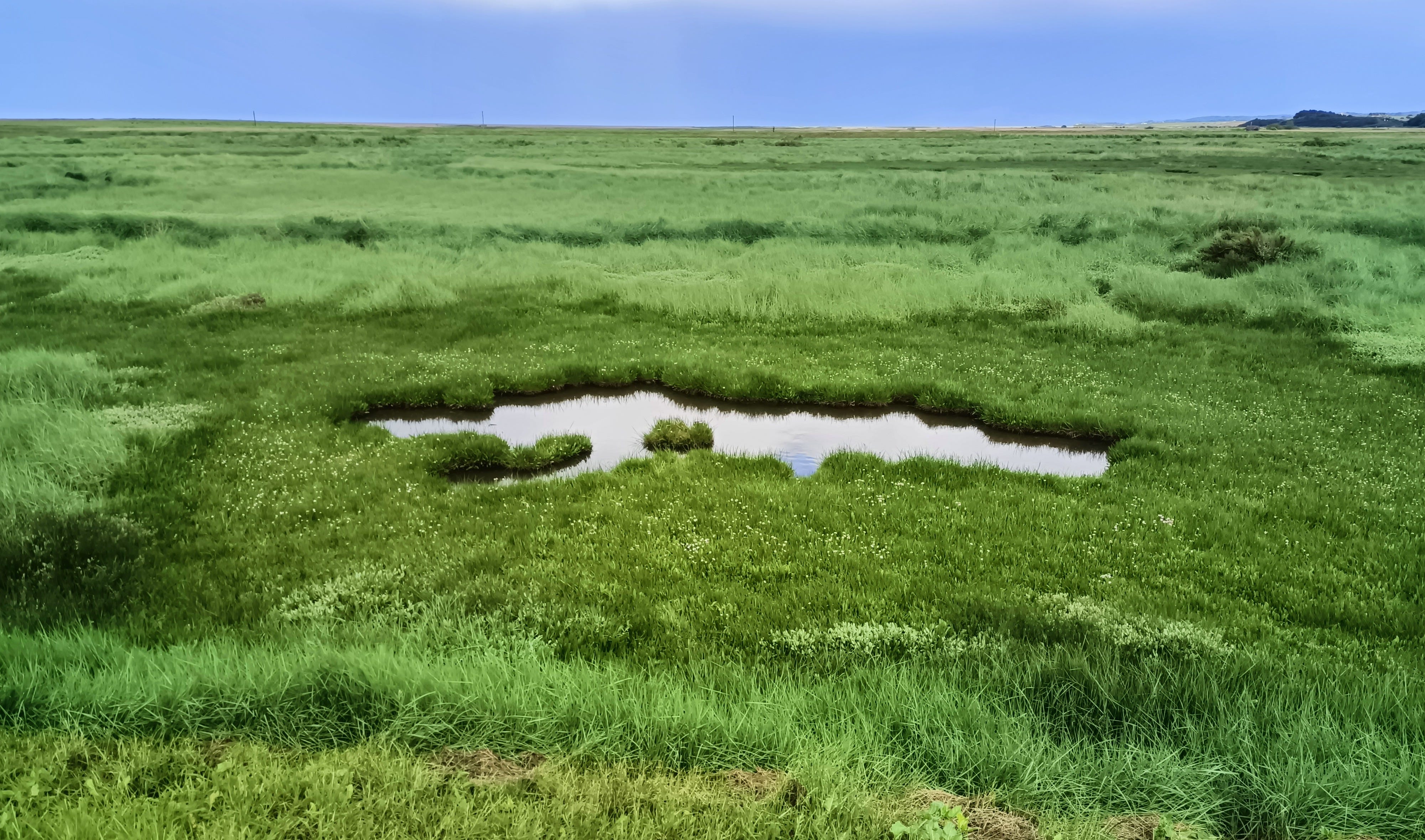
This poem is on one level a partial working through of the experience of an extremely wet (and in many other ways difficult) mini-break, a couple of years ago now, to the north Norfolk coast - Cromer and points west. This photo above was one of the few that I took, on the trip in question - most of the rest of the time, the universe was awash with torrents of rainfall.
I don’t wish to grumble, though it was fun to find words here for the wretchedness (!). Those flatlands and wetlands of East Anglia are beloved of me across nearly fifty years of visits. I do hate a squelchy sock, but socks will dry in front of a good fire, whereas the terrain of Burnham Overy and Walberswick and W.G. Sebald’s The Rings of Saturn will disappear into the North Sea for ever at the present rate of global heating.
Our relationships with Earth systems and the ways in which these parallel our relationships with each other and with our communities, is the emotional and philosophical, poetic and psycho-social terrain that keeps calling to me. “The problem is that the problem is us”, as Roy Scranton wrote (Learning to Die in the Anthropocene, 2015 p. 68). We always imagine that resources whether ecological or relational or individual, are somehow inexhaustible. It is loving kindness and connectedness, as well as coastlines, that rills through our faintly reaching fingers, and is no more retrievable.
Because I am a great believer in cross-currents between poetry and other art forms, and in cross-disciplinary collaboration generally, I am very glad to record here briefly that this poem (and the me that it wrote) entered into a dialogue with Rose Ravetz, who among many other things is co-producer of the very wonderful film Wind, Tide and Oar - Encounters with Engineless Sailing. Many thanks to her - and to her brother Huw Wahl who directed that film - and to my dear friend Wayne Martin, who made the introductions. Check the film out if you can!
This poem, along with ‘Whisper’ was published in the anthology ‘Unwhispered Legacy’, which you can access in full here. These two poems of mine were written nearly a year apart, and are located on different sides of the Atlantic Ocean, but are companion pieces, at least in their ecological dimension.
Massive thanks to Paul Short of The Book Bag for having put together that very fine anthology (and for the nomination!). The download is free but the project is fundraising for Médecins Sans Frontières and so please do make a donation if the spirit moves.
Excellent poem and writing
It was in Burnham Overy Staithe that I discovered a remarkable book “Maurice Maeterlinck (1905) Treasure of the Humble.” It was profound and timely entry into my life, which came back to me this week! In Maeterlinck is striving for: “a larger idea of beauty, and a better apprehension of its inward and spiritual grace.” He came pretty close to describing it! Thanks for sharing.
“Grace means pardon, forgiveness, favour, benefice, inspiration; it is a form of address, a pleasing style of speaking or painting, a gesture expressing politeness, and, in short, an act that reveals spiritual goodness. Grace is gratuitous; it is a gift. The person who receives it, the favoured one, is grateful for it; if he is not base, he expresses gratitude. That is what I am doing at this very moment with these weightless words.”
Ocatavio Paz (1990) Octavio Paz Nobel Lecture - In Search of the Present
I am always grateful when touched by grace.
David